Introduction
Cryptocurrency trading has matured significantly, but one question still confuses many users: Should you use a centralized or decentralized crypto exchange? This article explores the differences between Centralized vs Decentralized Crypto Exchanges.
In 2026, both models play major roles in the global crypto ecosystem. Each has strengths, weaknesses, and ideal use cases. Understanding how they differ helps traders and investors choose platforms that match their goals, experience level, and risk tolerance.
This guide from financetop10.com clearly explains centralized vs decentralized crypto exchanges in simple, practical terms.
What Is a Centralized Crypto Exchange?
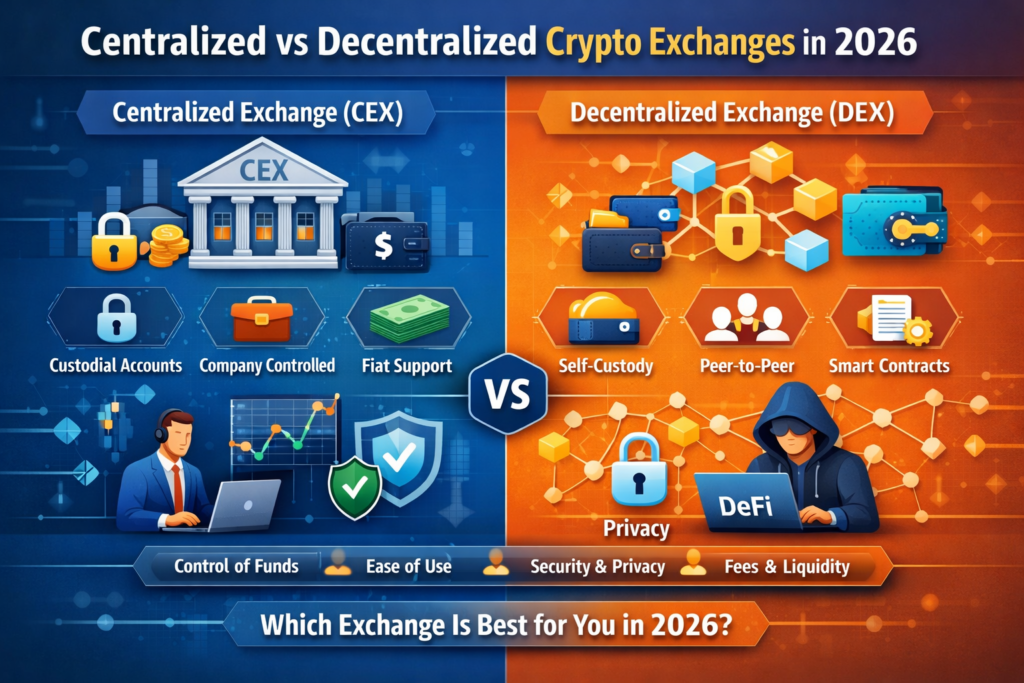
A centralized exchange (CEX) is operated by a company that acts as an intermediary between buyers and sellers.
Key characteristics:
- User accounts managed by the platform
- Custody of user funds
- Order books and matching engines
- Customer support services
Centralized exchanges function similarly to traditional financial platforms, making them popular with beginners.
What Is a Decentralized Crypto Exchange?
A decentralized exchange (DEX) operates without a central authority.
Key characteristics:
- Peer-to-peer trading
- Smart contract-based execution
- Users retain control of private keys
- No centralized custody of funds
DEXs align closely with the original philosophy of cryptocurrency: decentralization and user sovereignty.
Key Differences Between Centralized vs Decentralized Crypto Exchanges
1. Control of Funds
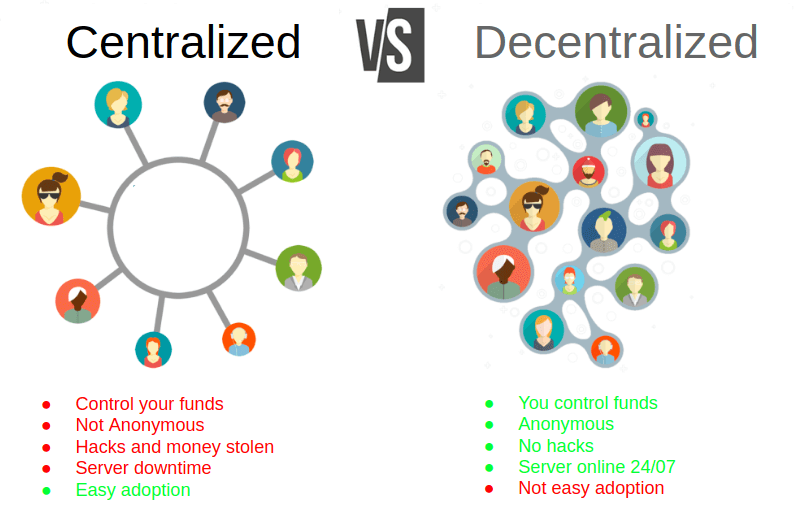
- Centralized exchanges: Hold user funds on their behalf
- Decentralized exchanges: Users control funds through their own wallets
This difference has major implications for security and responsibility.
2. Ease of Use
Centralized exchanges typically offer:
- Simple interfaces
- Fiat currency support
- Faster onboarding
Decentralized exchanges require:
- Wallet setup
- Blockchain knowledge
- Manual transaction confirmation
Winner for beginners: Centralized exchanges
3. Security Model
Centralized exchanges:
- Use advanced security systems
- Are targets for large-scale attacks
Decentralized exchanges:
- Reduce centralized attack points
- Depend on smart contract security
Both models involve risk, but the nature of that risk differs.
4. Privacy and Identity
- Centralized platforms often require identity verification
- Decentralized platforms usually allow anonymous access
Privacy-conscious users often prefer decentralized options.
5. Fees and Costs
Centralized exchanges:
- Charge trading fees
- May charge withdrawal fees
Decentralized exchanges:
- Charge network fees
- No platform custody fees
Costs vary depending on blockchain congestion and platform design.
Liquidity and Trading Volume
Centralized exchanges generally offer:
- Higher liquidity
- Tighter spreads
- Faster execution
Decentralized exchanges are improving but may still experience:
- Slippage
- Lower volume on some pairs
Liquidity remains a major deciding factor for active traders.
Regulatory Considerations in 2026
By 2026, regulations have increased globally:
- Centralized exchanges face stricter compliance
- Decentralized platforms operate in regulatory gray areas
This impacts availability, features, and user access in different regions.
Which Exchange Type Is Best for You?
Choose Centralized Exchanges If You:
- Are new to crypto
- Want fiat onramps
- Prefer customer support
- Trade frequently
Choose Decentralized Exchanges If You:
- Value self-custody
- Want greater privacy
- Understand blockchain mechanics
- Participate in DeFi ecosystems
The Hybrid Future of Crypto Exchanges
In 2026, many platforms blend both models:
- Centralized interfaces with decentralized custody
- Improved wallet integrations
- Layer-2 scalability solutions
The line between centralized and decentralized is gradually blurring.
FAQ Section
Are decentralized exchanges safer?
They reduce custody risk but introduce smart contract risks.
Do I need a wallet for decentralized exchanges?
Yes, users must connect their own crypto wallets.
Can beginners use decentralized exchanges?
Yes, but they should learn basics first to avoid costly mistakes.
Will centralized vs decentralized crypto exchanges coexist in the future? Yes, in 2026 many platforms combine both models, offering centralized usability with decentralized custody features.


