Introduction
High-yield savings accounts have become a popular financial tool for savers seeking better returns without taking on market risk. In 2026, these accounts are widely offered by digital banks and online financial platforms, often paying significantly higher interest than traditional savings accounts.
But how do high-yield savings accounts actually generate returns? Where does the interest come from—and is it sustainable?
This article breaks down how high-yield savings accounts work, using clear explanations designed for beginner to intermediate readers. At financetop10.com, we believe understanding the mechanics behind financial products leads to smarter money decisions.
What Is a High-Yield Savings Account?
A high-yield savings account is a deposit account that offers:
- Higher interest rates than standard savings accounts
- Easy access to funds
- Low or no monthly fees
These accounts are typically offered by online-first banks or digital financial institutions rather than traditional brick-and-mortar banks.
Where Do the Higher Returns Come From?
1. Lower Operating Costs
Digital banks do not maintain large branch networks. This reduces:
- Rent expenses
- Staffing costs
- Administrative overhead
Savings from these efficiencies are partially passed on to customers through higher interest rates.
2. Interest Rate Spread
Banks earn money by:
- Paying interest to depositors
- Lending those funds at higher rates
The difference between what banks earn and what they pay is known as the interest spread. High-yield savings accounts still generate profit for banks, even with higher payouts.
3. Central Bank Rate Environment
Interest rates set by central banks influence:
- Loan pricing
- Savings rates
In higher-rate environments, banks can offer better savings yields while maintaining profitability.
How Interest Is Calculated
High-yield savings accounts typically calculate interest:
- Daily or monthly
- Based on account balance
- Compounded regularly
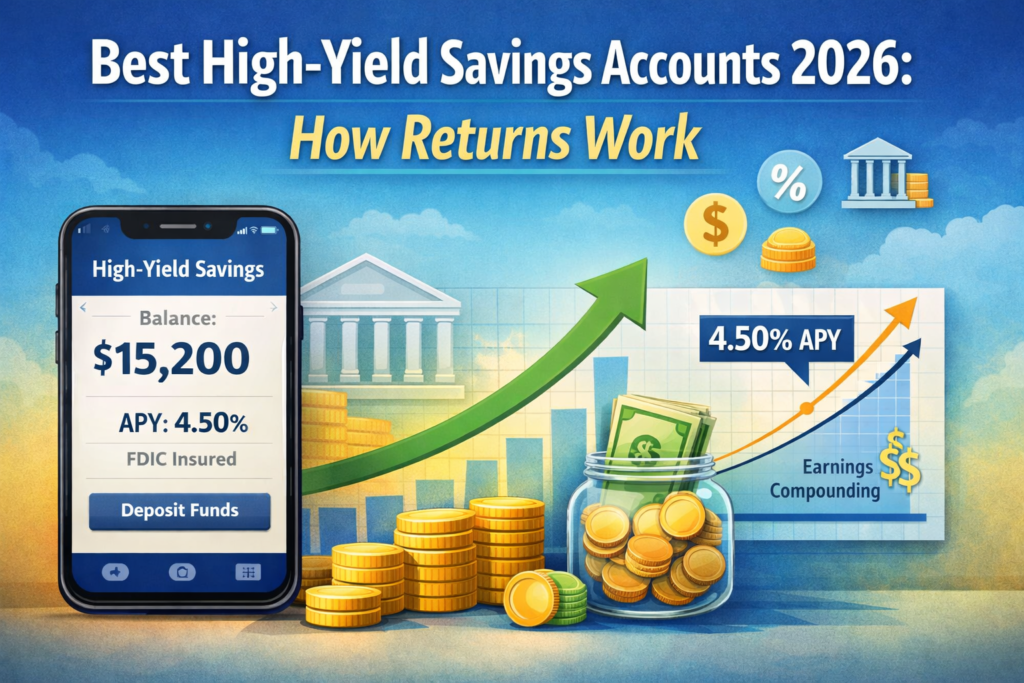
Even small differences in interest rates can lead to meaningful gains over time due to compounding.
Why Traditional Savings Accounts Pay Less
Traditional banks often:
- Rely on customer inertia
- Focus on in-branch services
- Allocate funds to legacy systems
As a result, savings rates may remain low even when market conditions change.
Key Benefits of High-Yield Savings in 2026
High-yield savings accounts offer:
- Capital preservation
- Predictable returns
- Liquidity
- Simplicity
They are especially useful for:
- Emergency funds
- Short-term savings goals
- Parking cash during market uncertainty
Potential Limitations to Understand
Despite their advantages, high-yield savings accounts are not perfect.
Variable Interest Rates
Rates can change depending on market conditions.
Inflation Risk
Returns may not always outpace inflation.
Deposit Limits
Some accounts cap balances that earn the highest rate.
Understanding these factors helps set realistic expectations.
Who Should Use High-Yield Savings Accounts?
These accounts are ideal for:
- Risk-averse savers
- Beginners building financial foundations
- Investors waiting for market opportunities
They complement, rather than replace, long-term investment strategies.
The Role of High-Yield Savings in a Balanced Portfolio
In 2026, many users combine:
- High-yield savings for liquidity
- Investments for growth
This balanced approach improves financial stability and flexibility.
Final Thoughts
High-yield savings accounts generate returns through efficiency, lending activity, and favorable rate environments—not financial magic. When used correctly, they provide a reliable and low-risk way to grow cash holdings.
At financetop10.com, we see high-yield savings as a cornerstone of smart personal finance in a digital world.
FAQ Section
Are high-yield savings accounts safe?
Yes, reputable providers follow strict regulatory standards.
Can rates change suddenly?
Yes, rates are variable and can rise or fall.
Are these accounts better than traditional savings?
In most cases, yes—especially for online-savvy users.


