Introduction
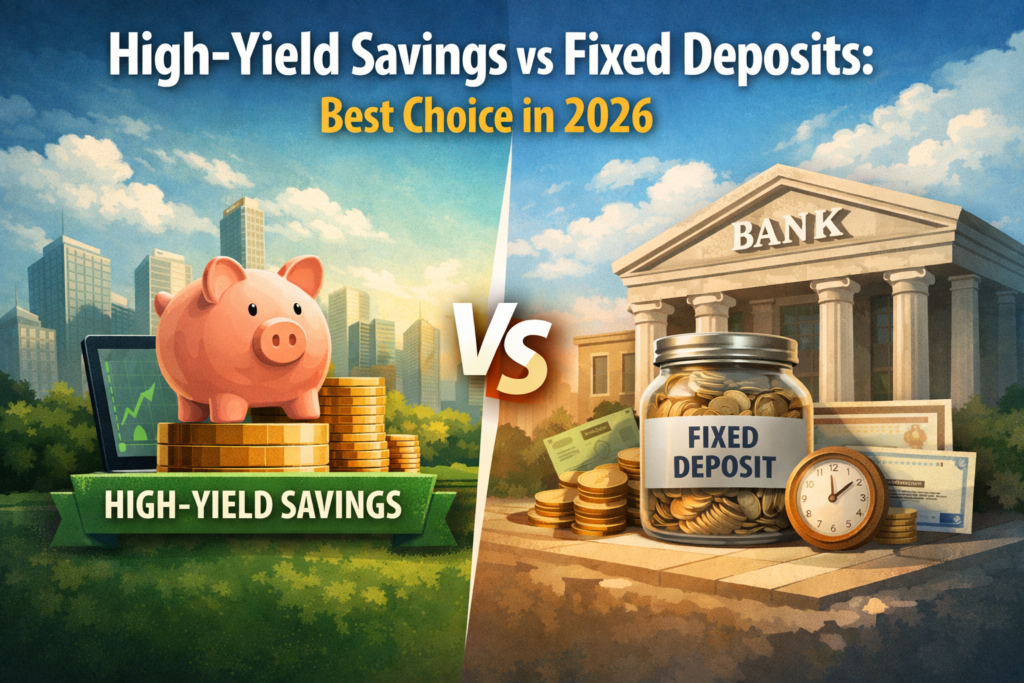
Choosing where to store savings is one of the most important financial decisions individuals make. In 2026, two popular low-risk options dominate global markets: high-yield savings vs fixed deposits and fixed deposits.
Both offer capital protection and predictable returns—but they differ significantly in flexibility, access, and use cases. This article provides a clear global comparison to help readers choose the right option for their needs.
This article explores the differences between high-yield savings vs fixed deposits to aid your decision-making process.
What Are Fixed Deposits?
Fixed deposits (also known as term deposits) require users to:
- Lock funds for a fixed period
- Earn a predetermined interest rate
- Accept penalties for early withdrawal
They are widely offered by traditional banks worldwide.
Key Differences Between High-Yield Savings and Fixed Deposits
1. Liquidity and Access
High-yield savings:
- Allow withdrawals anytime
- Ideal for emergencies
Understanding High-Yield Savings vs Fixed Deposits
Fixed deposits:
- Lock funds for months or years
- Penalize early withdrawals
Winner: High-yield savings
2. Interest Rate Structure
High-yield savings:
- Offer variable rates
- Adjust to market conditions
Fixed deposits:
- Offer fixed rates
- Provide certainty
Winner: Depends on rate environment
3. Flexibility
High-yield savings:
- No lock-in
- Easy to add or withdraw funds
Fixed deposits:
- Rigid structure
- No partial withdrawals
Winner: High-yield savings
4. Return Predictability
Fixed deposits provide:
- Guaranteed returns
- Protection from rate fluctuations
High-yield savings rates may change over time.
Winner: Fixed deposits
Global Usage Trends in 2026
Across regions:
- Digital economies favor high-yield savings
- Traditional banking systems still promote fixed deposits
- Younger users prefer flexibility
- Conservative savers prefer certainty
Both products coexist due to different user needs.
Which Option Is Better for Different Goals?
Emergency Funds
High-yield savings accounts are better due to instant access.
Short- to Medium-Term Goals
High-yield savings provide flexibility without penalties.
Long-Term Fixed Goals
Fixed deposits suit users who value guaranteed returns.
Combining Both for Smarter Saving
Many users in 2026:
- Keep emergency funds in high-yield savings
- Lock surplus funds into fixed deposits
This hybrid approach balances liquidity and stability.
Risks to Consider
Both options carry:
- Inflation risk
- Opportunity cost
Neither is designed for high growth—but both protect capital effectively.
Final Verdict
High-yield savings accounts prioritize flexibility and accessibility, while fixed deposits emphasize certainty and discipline. The better choice depends on financial goals, time horizon, and risk tolerance.
At financetop10.com, we recommend understanding both and using them strategically rather than choosing only one.
FAQ Section
Which is safer: high-yield savings or fixed deposits?
Both are low-risk when offered by regulated institutions.
Can I lose money in either option?
Capital loss is unlikely, but inflation can reduce real returns.
Are fixed deposits outdated in 2026?
No, they remain useful for specific financial goals.


